
Networks Built From a Plan, Not Patched Together
Structured cabling installation in Burlington for homes and small offices that need organized, labeled, end-to-end network wiring
A cable stapled along a baseboard and plugged into a switch is not structured cabling—it is a workaround that compounds with every device added. Integrity Home Technologies installs structured cabling in Burlington, running organized data and low-voltage wiring from a central patch panel to every room, outlet, and access point in a planned sequence. The difference shows up immediately in how the network performs and in how easy the system is to manage or expand later.
The process begins with a property survey and a map of every drop location before the first cable is pulled. From that map, the crew routes cable through existing framing using concealed runs—through walls, attics, and crawlspaces—terminating each at a labeled patch panel at the main location. Every run is tested for continuity and signal before the install is closed out, and the customer receives a documented record of which cable goes where. That documentation is what separates a structured installation from a cable that disappears into a wall with no record of where it lands.
To start with a property walkthrough and a documented drop map for your specific layout, contact Integrity Home Technologies directly.
How Structured Cabling Addresses Network Failures
Older Northern Kentucky homes, including many in Burlington, were built without any provision for data wiring—no conduit, no dedicated runs, and framing that was never intended to carry cable laterally across floors. Running structured cabling through that framing without damaging finishes is the primary technical challenge on retrofit jobs. The crew identifies paths through attic space and interior partitions, uses a fish tape or flex drill bit to reach outlet locations, and keeps wall openings limited to the keystone jack cutout. In homes where the layout makes a direct path difficult, the routing plan adapts rather than defaulting to surface raceways.
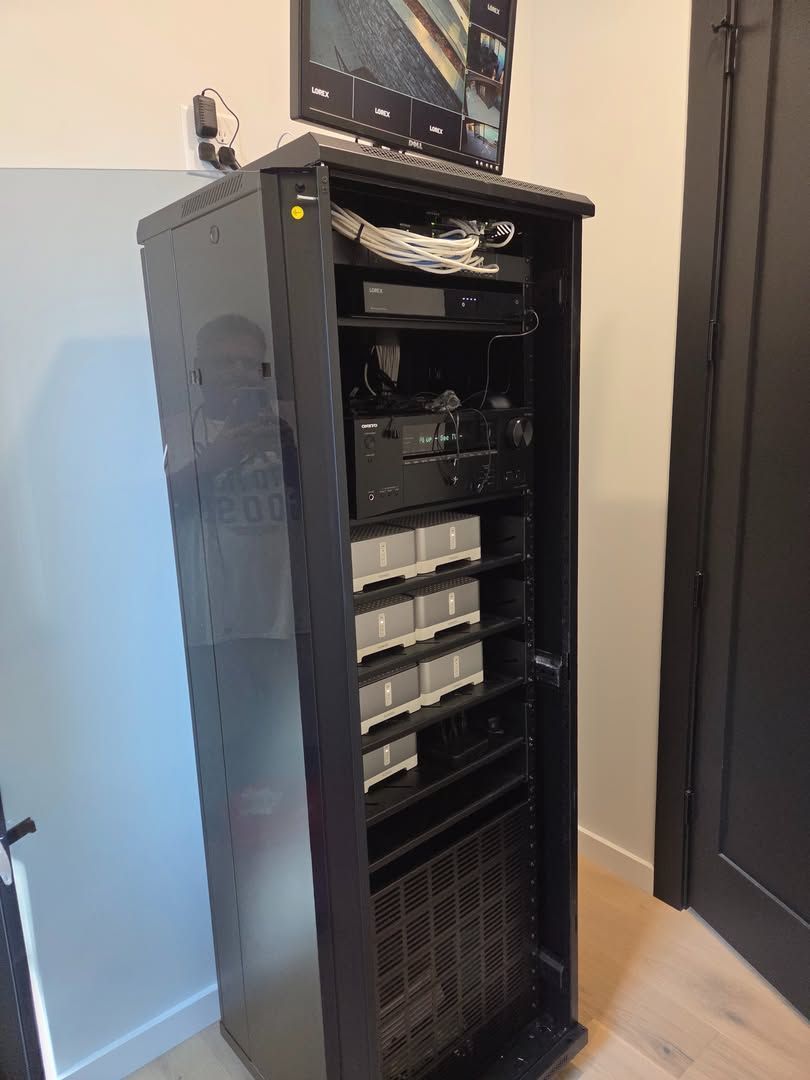
Once the install is complete and tested, what changes is specific: devices at every outlet location reach the router at rated cable speed rather than over a stretched wireless signal, the patch panel identifies each run by label so any port can be traced in seconds, and adding a device later means plugging into an existing drop rather than running new cable. Integrity Home Technologies delivers a wiring map at the close of each job so those connections stay documented.
The scope of a structured cabling job is determined by the number of drops, the routing complexity through the existing framing, and whether the central panel location needs a dedicated enclosure. Jobs in new construction follow a simpler path since cable can be staged before drywall, but the labeling and testing standards are identical regardless of construction stage.
What Homeowners Ask About the Cabling Work
The questions below address how structured cabling is planned, installed, and verified, with particular attention to the retrofit conditions common in Burlington and Union homes.
What happens during the property survey before cable is pulled?
The crew walks each room and identifies where network drops are needed, then traces a routing path from each location back to the panel point—through the attic, along interior walls, or through the crawlspace. That path determines how many access points will be opened and whether any obstacles, such as fire blocking or HVAC runs, require a detour before cable is staged.
How is cable kept concealed in a home where walls are already closed?
Most runs use the attic or crawlspace as a transit corridor, drilling down or up through top and bottom plates to reach the outlet box. Where that path is blocked, the crew uses a flex drill bit to navigate through wall cavities, keeping the finished opening limited to the size of the keystone jack plate.
Why is a patch panel used instead of running cable directly to a router or switch?
A patch panel centralizes every drop in one location and lets each run be identified and rerouted by swapping a short patch cord. Direct home-run connections to a switch work functionally but eliminate the ability to reassign ports without touching the cable behind the wall.
How is each run tested before the job is closed out?
A cable tester checks continuity and verifies that all eight conductors in a Cat6 run are intact and correctly paired at both ends. This catches wiring errors at the termination before drywall is closed or furniture is moved back into place, so problems are corrected on site rather than diagnosed later.
What makes a structured cabling installation easier to expand later?
Labeled runs at both the drop and panel ends mean any new device can be connected by identifying the relevant patch port and plugging in, without tracing cable. Leaving slack at the panel also allows the patch panel to be reconfigured without pulling new wire to the termination point.
Integrity Home Technologies also installs structured cabling in Cincinnati, Northern Kentucky, Union, Lebanon, and Newport. Arrange a property walkthrough with Integrity Home Technologies to map your drop locations and get a clear scope of what the installation will involve.