
Speaker Placement Mapped Before a Single Wire Runs
Home audio installation in Burlington for homes where plaster walls and original trim make wire routing the deciding factor in a clean result
Older Burlington and Northern Kentucky homes were built with plaster walls and original millwork that cannot be easily repaired if wire routing cuts through the wrong cavity or misses a clear path between studs. Integrity Home Technologies installs home audio systems in Burlington with wire routing planned around the actual wall construction of each property, so the finished result delivers even sound without visible cuts or patches in the walls. Owner Stephen Ratcliffe works on-site for every installation, mapping speaker placement and routing paths before running any wire, and tests every component before leaving the property.
Stephen begins each project by assessing room size, wall construction type, and how the audio will be used—background listening in an open kitchen reads differently than a dedicated listening room or a home theater setup, and speaker placement changes accordingly. Speakers are mounted at the height and angle suited to each room's listening position rather than placed at a fixed standard height, and wiring is concealed where the wall construction allows a clean routing path. On properties in Union and Northern Kentucky with original plaster, that routing assessment determines which walls can accept in-wall runs and which require surface management before a single hole is drilled.
To have your rooms assessed for speaker placement and wire routing before any work begins, schedule an on-site evaluation with Integrity Home Technologies.
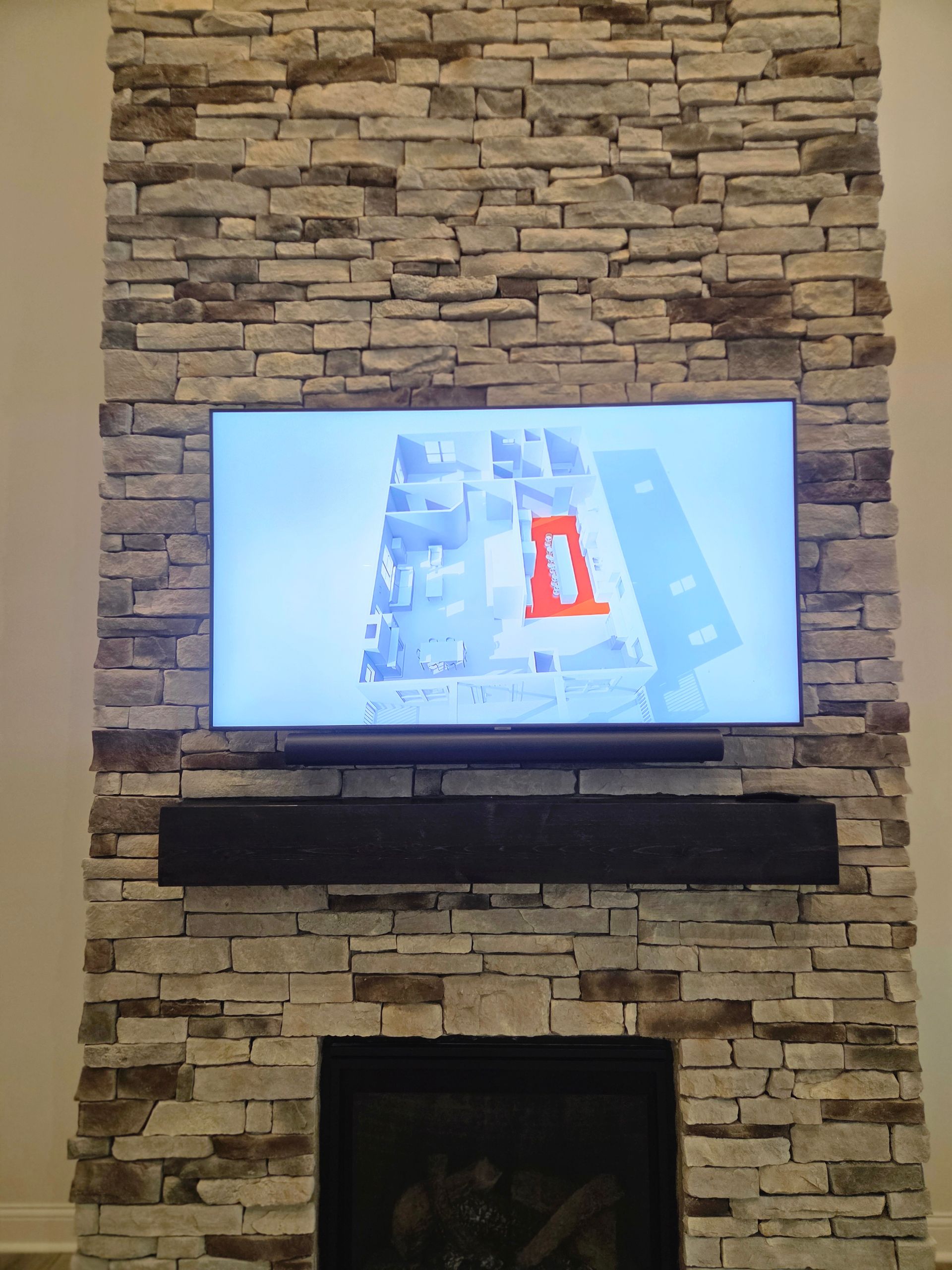
What Proper Home Audio Installation Actually Requires
Even sound across a room depends on speaker angle and distance from the primary listening position, not just on the quality of the components. During installation, each speaker is positioned and angled based on the room geometry and where people actually sit, which means the mounting height and toe-in angle are set individually rather than applied uniformly across all rooms in the home. Integrity Home Technologies tests the system fully before closing out the job—levels balanced, connections verified, and the control interface confirmed to be operable without technical knowledge on your part.
After the system is running, what you notice is audio that sounds consistent from the primary listening positions in the room without hot spots directly in front of a speaker or dead zones at the edges of the space. Cables are not visible along baseboards or across ceiling surfaces where the construction allowed a routed path, and the control system operates through a straightforward interface rather than requiring a separate app for each component.
Multi-room audio setups require additional planning because the signal routing between rooms must account for how far each run travels and whether the home's existing wiring infrastructure can support the additional load without signal degradation. That assessment happens during the initial room evaluation, before components are selected, so the system recommendation matches what the structure of the home can support rather than what would work in ideal conditions.
What Property Owners Ask About Audio Installation
The questions below address how home audio installation decisions are made, what the process involves for different room types, and what quality work looks like when the job is finished.
How does room size and use affect speaker placement?
A larger room requires speakers positioned to avoid sound arriving at the listening position from too steep an angle, while a smaller room may need speakers angled inward to prevent too much early reflection off side walls—decisions made based on the actual room dimensions and furniture layout rather than a fixed formula.
Why does wall construction in older Northern Kentucky homes affect where speakers can be mounted?
Plaster walls often have metal lath behind them in some sections, which blocks in-wall routing and requires a different drill bit and anchoring approach, and original trim profiles limit where surface-mounted raceway can be run without looking out of place—factors assessed before any mounting location is committed.
What is confirmed during the system test before the installation closes?
Speaker levels are balanced across all positions, each connection is verified as active, the signal path from source to speaker is confirmed clean, and the control interface is demonstrated so you can adjust volume and source without needing to reference documentation.
How is speaker mounting height determined for a specific room?
Height is set so that the speaker's tweeter is at or near seated ear level from the primary listening position, adjusted for the room's ceiling height and the distance between the speaker and the listening area.
What separates a planned audio installation from self-installed components placed at convenient wall locations?
Convenient placement prioritizes the mounting surface over the listening geometry, which typically results in one speaker being closer to the primary seat than the other or both speakers aimed at a wall rather than at the listening position—producing uneven sound that equalization alone cannot fully correct.
Integrity Home Technologies also installs home audio systems in Cincinnati, Northern Kentucky, Union, Lebanon, and Newport. To start with a room assessment and speaker placement plan specific to your home, call (513) 375-2342.