
Cameras Placed Where Coverage Actually Matters
Security camera installation in Burlington for homes with long driveways, wooded approaches, and blind spots along the property line
Integrity Home Technologies installs security camera systems for homes in Burlington, handling every part of the job—wiring, mounting, and configuration—through a single installer with more than 20 years of low voltage experience. Homeowners with sprawling lots or tree-lined driveways often discover that a standard four-camera kit leaves large sections of the property line uncovered. The system design here starts with camera placement mapped to actual entry points and sightlines before any equipment touches a wall.
The process opens with a site walk where the owner evaluates every entry point, identifies blind spots along the driveway and yard perimeter, and confirms where power and network connections are accessible. That walk determines how many cameras are needed and where each one goes, rather than defaulting to a fixed kit layout. Integrity Home Technologies works with 2GIG Security and Honeywell Resideo equipment, and each camera is cabled back to a recorder or network switch using a routed, permanent run rather than surface-mounted conduit wherever the construction allows.
To get a camera placement plan built around your property's specific entry points and sightlines, schedule a site walk with Integrity Home Technologies.
What Happens Before and After the Cameras Go Up
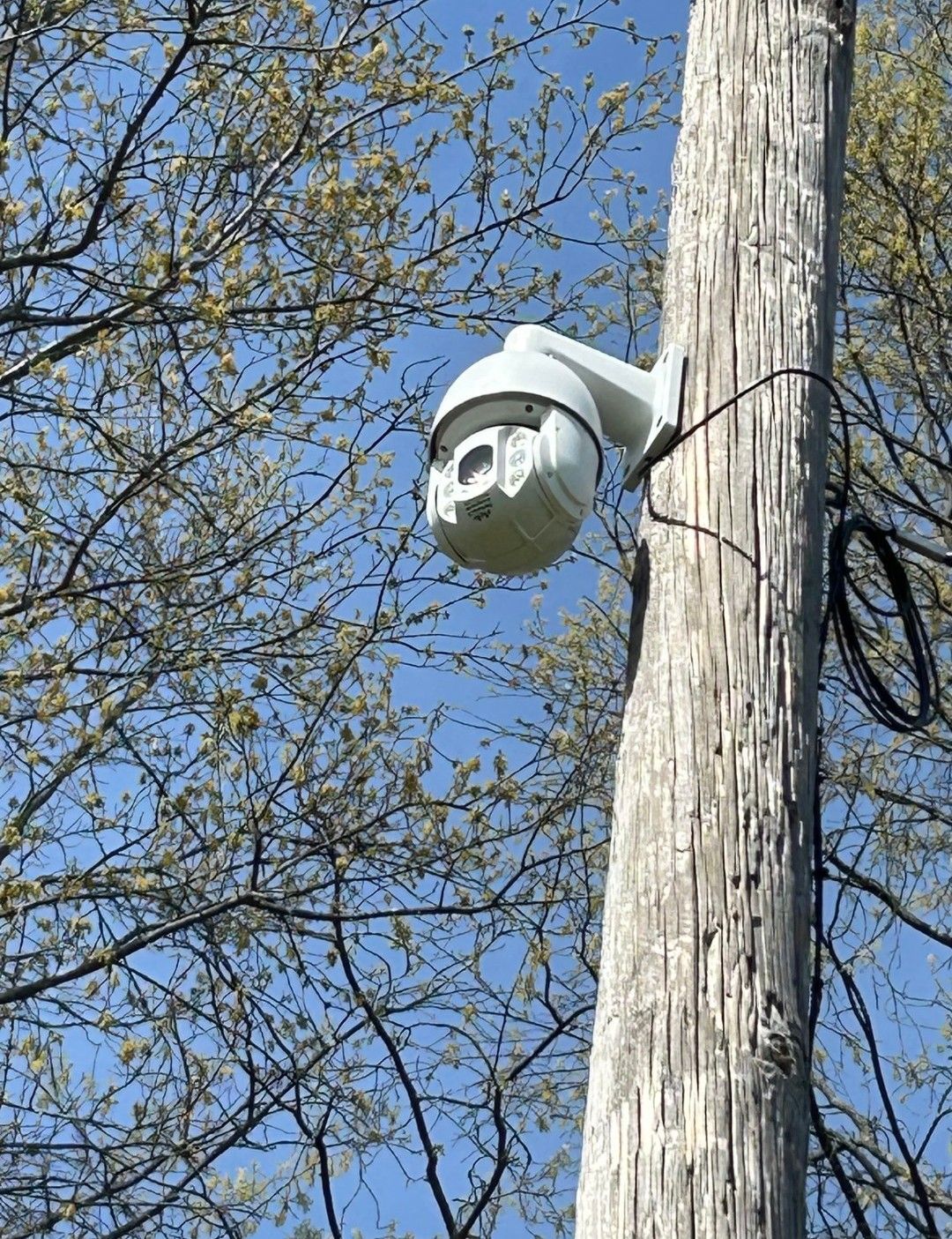
Once cameras are mounted and cabled, each one is tested for night-vision performance and confirmed against the planned field of view before the job closes. Remote viewing is configured on your phone during that same visit, so you leave the appointment with a working system rather than a stack of setup instructions. On larger Burlington lots where a long driveway runs through a wooded approach, the camera positions are verified at dusk or under lowered lighting conditions specifically because night-view angle and IR range determine whether license plates and faces are readable in footage.
After installation, what you will notice is a live view on your phone that covers the full perimeter without gaps at the corners of the driveway or along fence lines—areas that single-camera setups routinely leave dark. The recorder is placed in a dry, accessible location and is accessible remotely, so checking footage does not require going to the equipment.
Properties with detached garages, outbuildings, or a secondary driveway entrance require separate network planning because a camera mounted at the far end of a long lot may be beyond the reach of a standard wireless signal, making a wired cable run to a remote switch the more reliable path. That decision gets made during the site walk, not after the hardware is already on the wall.
Common Questions About the Camera Installation Process
The questions below focus on how security camera installation actually works—what happens on-site, how placement decisions get made, and what the finished system looks like.
What happens during the site walk before installation begins?
The site walk maps every entry point, documents where power and network access is available, and identifies sightline gaps that would leave sections of the property uncovered. Camera positions are finalized before any drilling starts.
How is camera height and angle determined for each location?
Height is chosen to capture faces and license plates within the camera's resolution range while keeping the lens above easy reach, and angle is set against the specific sightline to the entry point or driveway approach being covered.
Why does recorder placement affect footage quality on larger properties?
A recorder placed too far from the cameras or in a location with inconsistent power can introduce dropped frames or connection failures, so the dry, accessible spot selected during the site walk accounts for both cable run length and stable power delivery.
What is the difference between a wired and wireless camera run on a Burlington property with a long driveway?
Wireless signals weaken over distance and through dense tree cover, which is common on wooded hillside lots in Northern Kentucky, so a wired cable run to a remote network switch is the standard approach when the camera position is more than 150 feet from the recorder.
How do you confirm night-view performance before closing out the job?
Each camera is checked in reduced light against its planned field of view to confirm that IR range covers the intended area and that glare from nearby surfaces, such as a light-colored garage door or reflective siding, does not wash out the image.
Integrity Home Technologies also installs security camera systems in Cincinnati, Union, Lebanon, Newport, and Mason. To start with a site walk that maps your property's entry points and coverage gaps, call Integrity Home Technologies at (513) 375-2342 to set up an appointment.