
Wired Network Runs That Reach Every Room
Home networking installation in Burlington for occupied homes where reliable connections to TVs, cameras, and smart devices require cabling without tearing up finished walls
Wired home network installation in an occupied home is a routing problem before it is a technology problem. Integrity Home Technologies installs home networking in Burlington and Northern Kentucky, running wired network drops, mounting access points, and configuring the equipment that keeps cameras, TVs, and smart devices connected without the signal loss that wireless alone cannot prevent. Every cable route is mapped before work begins, with the goal of reaching each room through attics, basements, or existing utility chases rather than fished-through finished walls. If you have lived with devices that drop connection, video calls that cut out in one room, or cameras that go offline because the Wi-Fi does not reach the corner of the yard, a wired backbone is what fixes that reliably.
Older homes in Newport and nearby areas present a specific routing challenge that newer construction does not: thick plaster walls and dense framing make traditional cable fishing impractical in most finished spaces, so the installer has to identify existing chases, pipe runs, and ceiling cavities that allow cable to travel between floors without opening walls. Stephen maps those routes at the start of every project and selects access points based on where the cable can actually be placed, not just where signal would ideally originate. Equipment is configured and tested in each room before the job is finished, so every device is connected and verified operational before he leaves.
To map the network runs for your home and review routing options without committing to unnecessary wall work, call Integrity Home Technologies at (513) 375-2342.
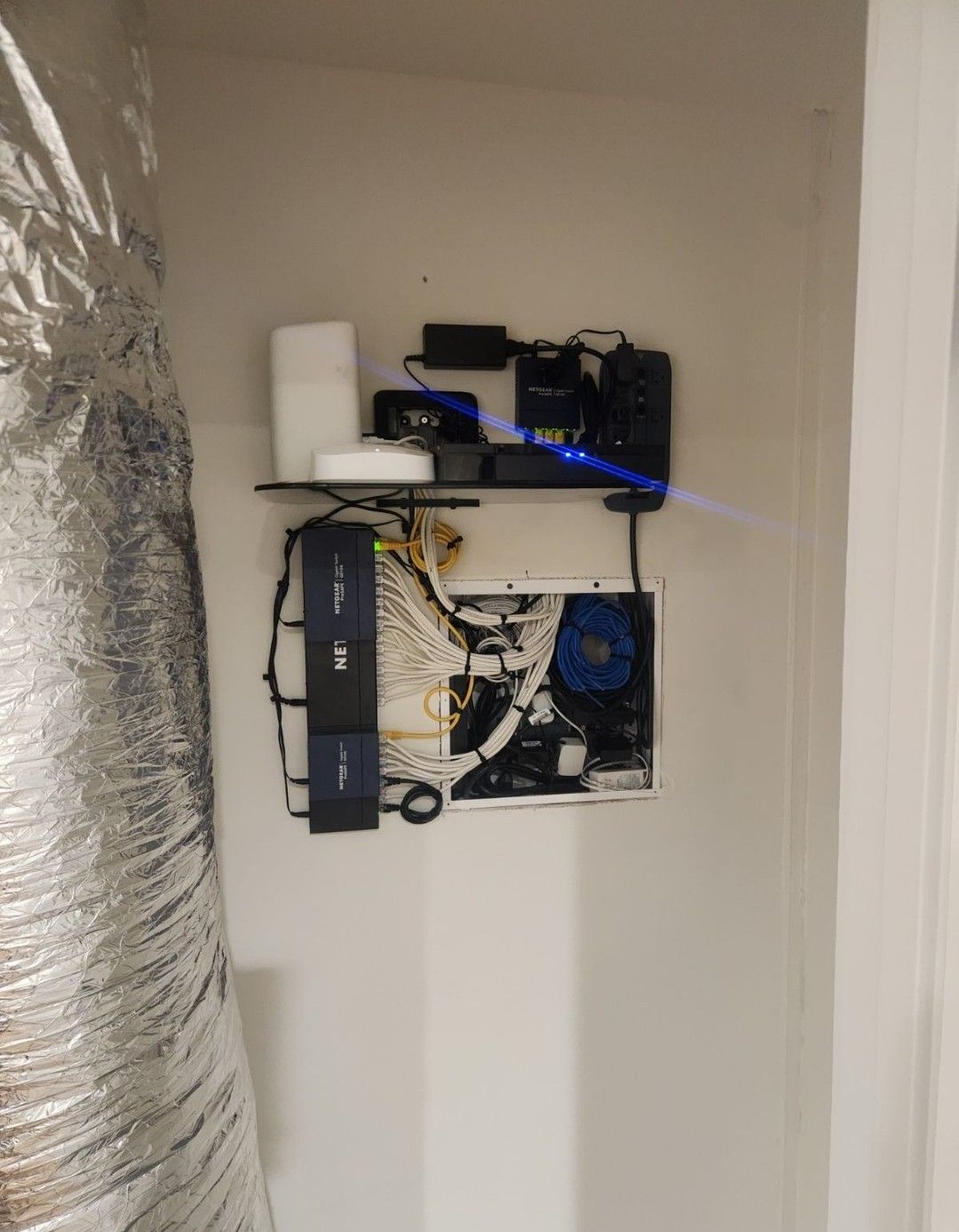
How Structured Cabling Solves What Wi-Fi Cannot
A wireless access point running through a mesh network is only as reliable as the backhaul connection feeding it. When access points communicate wirelessly with each other rather than over a dedicated wired connection, they divide their bandwidth between client traffic and backhaul traffic, which reduces throughput for every device connected to that node. Running a wired Ethernet drop to each access point eliminates that division entirely: the full wireless bandwidth of the access point is available to the devices in that room because the backhaul is handled by the cable. That is the functional reason wired infrastructure performs differently than a wireless-only system, and it is visible in connection stability rather than just speed tests.
Once the network is installed and configured, the specific changes you notice are the ones that were previously unpredictable. A camera that lost connection overnight stays online. A TV in a back bedroom that buffered during streaming holds a stable picture. A video call in a home office that cut out under load maintains a clear signal because it is on a wired drop rather than a wireless hop. Those are observable, consistent changes rather than incremental improvements.
Before the project begins, clarify what equipment is being supplied versus what you already own. Some clients have an existing router or access point they want to keep; others are starting from scratch and need the full stack. Integrity Home Technologies works with both situations, but the configuration approach differs depending on the equipment in play, and knowing that at the planning stage prevents rework on installation day.
Questions Before Starting Your Network Project
The following answers address how home network installation is planned and executed, including how existing home construction affects routing decisions and what the installation actually includes.
How does Stephen decide where to run cable before any work begins?
He maps the rooms that need wired drops first, then traces the routing path from each location back to the network equipment, identifying attics, basements, and utility chases that allow cable to travel without opening finished walls.
Why does older home construction in this area affect cable routing so significantly?
Plaster walls and tighter framing bays common in Newport-area homes built before the 1980s do not allow a cable to be fished vertically between studs the way drywall construction does, so routes must go around the structure using ceiling or floor cavities rather than through the wall itself.
What is the difference between running cable to a room and installing a wired access point?
A cable run to a room provides a connection point for a single device, like a TV or desktop; a wired access point installed on that run serves all wireless devices in the room with dedicated backhaul bandwidth rather than sharing it with other nodes in the network.
How is each room confirmed working before the installer leaves?
Each wired drop is tested for continuity and link speed after termination, access points are confirmed to show the correct network name and authentication, and each device that needs a network connection is verified connected and operational on-site rather than left for the homeowner to troubleshoot later.
What should you clarify before the installation begins regarding existing equipment?
Knowing whether you have a router, access points, or a switch already in place determines how the new cabling integrates with existing infrastructure, and identifying that before installation day means the configuration work can be completed in a single visit rather than returning with different equipment.
Integrity Home Technologies also installs home networking in Cincinnati, Northern Kentucky, Union, Lebanon, and Newport. To schedule a planning visit and map the network runs your home needs, call (513) 375-2342 and speak with Stephen about your specific layout and devices.