
Holiday Displays That Read Cleanly From the Street
Christmas light installation in Burlington for rooflines, eaves, and landscaping where the layout needs to be planned before a single clip goes up
Integrity Home Technologies installs holiday lighting in Burlington, handling rooflines, eaves, and landscape features from planning through takedown at the end of the season. The owner manages the installation directly, which means the person who planned the layout is the same person on the ladder running the display. Homes in Burlington range from brick-facade construction in older sections of the city to larger newer builds with long rooflines, and the approach to each differs in how clips are mounted, how power is routed, and how the display is balanced across the facade.
The crew plans the layout around the roofline, eaves, and landscape features first, then sequences the installation so power runs reach protected outlets with timers before fixtures are set. On brick and masonry surfaces common to older Burlington and Newport homes, clips and mounts are selected to avoid drilling into mortar or damaging trim—stapling into masonry is not a method used here. On larger newer homes where the roofline runs long, the layout is designed so the display reads as an even line from the street rather than clustering around entry points. Takedown at the end of the season is part of the job, which you should confirm is included when reviewing your estimate.
To get a layout plan drawn to your specific roofline and landscape, set up a pre-season site visit with Integrity Home Technologies before available dates fill.
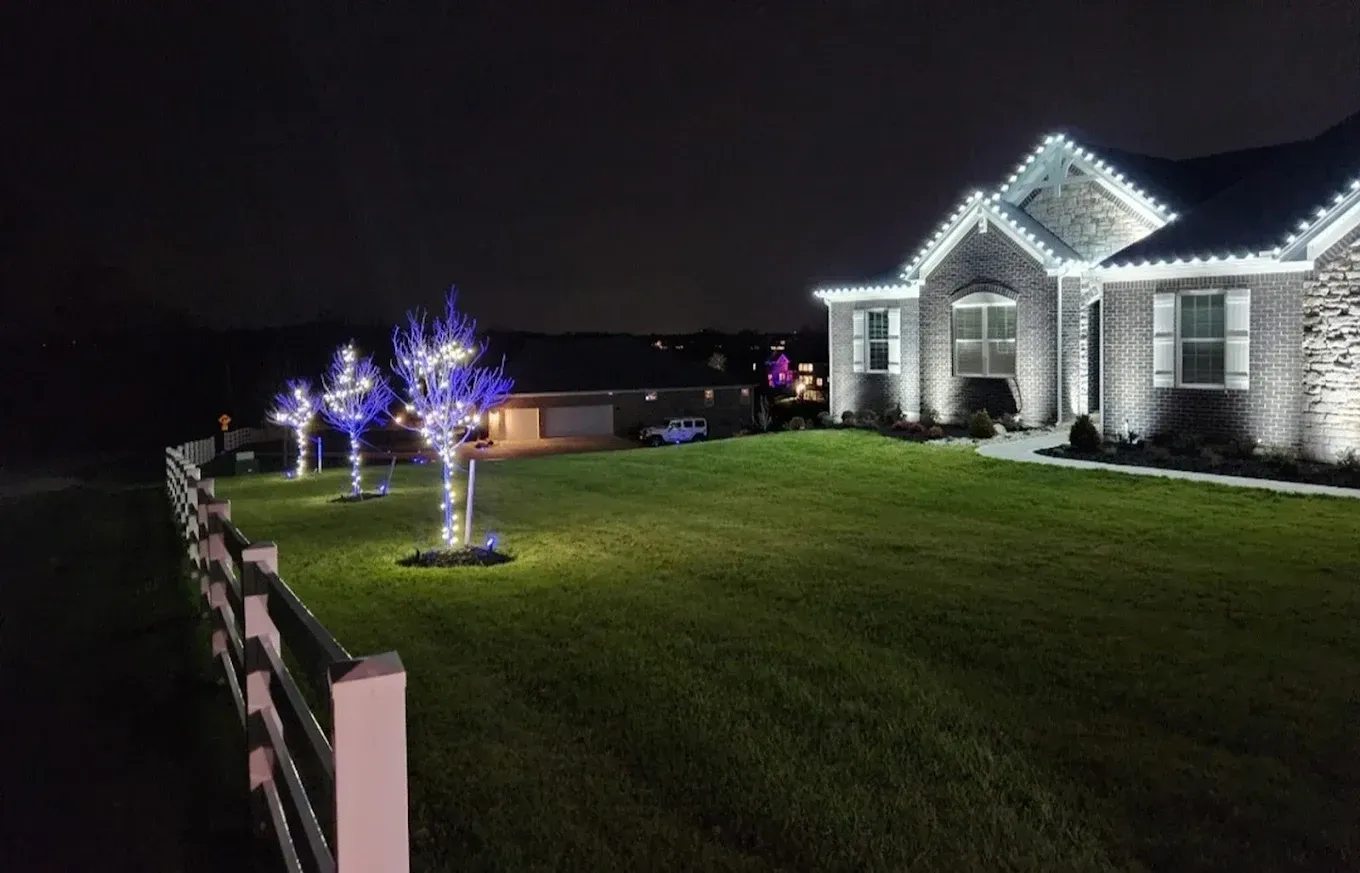
What Goes Into a Display That Holds Up the Whole Season
Holiday lighting that stays even from installation through takedown depends on how power is managed as much as how the fixtures are placed. Each run connects to a protected outdoor outlet and draws through a timer so the display cycles on and off without manual switching. Where a roofline run is long, power is staged at multiple points rather than extended from a single outlet, which prevents voltage drop that causes uneven brightness toward the end of a run. These decisions are made during planning, not discovered partway through the install.
When the installation is finished, the display reads as an intentional line along the roofline and eaves, landscape features are lit at the base rather than wrapped unevenly, and the timer operates without daily attention from the homeowner. There are no extension cords running across the lawn, no unlighted gaps in a roofline run, and no clips that have pulled away from the surface mid-season because the mount was not matched to the material.
Clip selection is one of the details that separates an installation that lasts the season from one that requires repeated trips back to reset fallen sections. On composite or wood fascia, a fascia clip or all-in-one light clip holds without surface damage. On brick, stone, or stucco, an adhesive or ridge clip is used depending on the surface texture. The crew confirms clip type by surface material during the layout walkthrough, not on the day the lights go up.
Questions Before Your Holiday Lighting Goes Up
The questions below address how holiday lighting installations are planned and executed in residential settings, including what determines layout decisions and how the work is sequenced.
How is the display layout determined before installation begins?
The crew walks the roofline, eaves, and landscape features and identifies where the display needs to be visible from the street, where power outlets are located, and which surfaces will accept which clip types. The run sequence is mapped from that walkthrough so the installation follows a planned order rather than improvising clip placement on site.
Why does roofline length affect how the power is staged?
A single power source feeding a long roofline run loses voltage as the distance from the outlet increases, which shows up as dimmer bulbs at the far end of the run. Longer rooflines are powered at two or more points to keep brightness consistent across the full length, a detail confirmed during the pre-installation walkthrough based on the actual run distance and outlet positions.
What is the difference between clipping lights on brick versus wood fascia?
Wood and composite fascia accept a wrap clip or all-in-one gutter clip that holds securely without fasteners. Brick and masonry require a clip designed to grip the edge of a course or ridge rather than penetrating the mortar, since stapling or nailing into brick mortar causes damage that is expensive to repair and is not a method used on masonry surfaces.
How does a larger newer Burlington-area home with a long roofline change what a layout requires?
On a home with an extended roofline, the display plan ensures lights run continuously from corner to corner rather than being concentrated at the entry peak. That even distribution requires more linear footage of lighting, a power plan that accounts for the full run length, and clip placement that follows the roofline geometry rather than approximating it.
What should homeowners confirm when reviewing a holiday lighting estimate?
Verify whether takedown at the end of the season is included in the quoted scope, whether the lights provided are owned by the installer or the homeowner after the job, and what clip method will be used on each surface type present on the home. Each of these affects what happens at the end of the season and what the surface looks like once the lights come down.
Integrity Home Technologies also installs Christmas lights in Cincinnati, Union, Lebanon, Newport, and Mason. To plan your roofline layout and confirm the seasonal scope before installation begins, speak directly with Integrity Home Technologies about your home's specific facade and what a clean display will require.