
Cable Routed Right the First Time
Home low voltage wiring in Burlington for security cameras, lighting, audio, and network devices that need clean, concealed runs
Integrity Home Technologies handles low voltage wiring for homes in Burlington, running cable for security cameras, network access points, audio systems, and lighting control through walls, attics, and crawlspaces. The owner has pulled and terminated these runs himself for over a decade, which means the person who routes the cable is the same person who stands behind how it is done. That accountability changes how the work gets scoped from the first conversation.
Every job starts by confirming device locations and mapping the wall or ceiling path before any cable moves. In existing homes, where framing is closed and finishes are already in place, that planning step determines how much of the structure needs to be disturbed. Each run is labeled at both ends, terminated, and tested before walls are closed or patched—so there are no unlabeled wires left behind and no guessing later about which cable serves which device. Ask during your estimate whether hole patching is included in the scope, since that step varies by job.
Arrange a walkthrough to review your device layout and get a clear picture of what the cable runs will require.
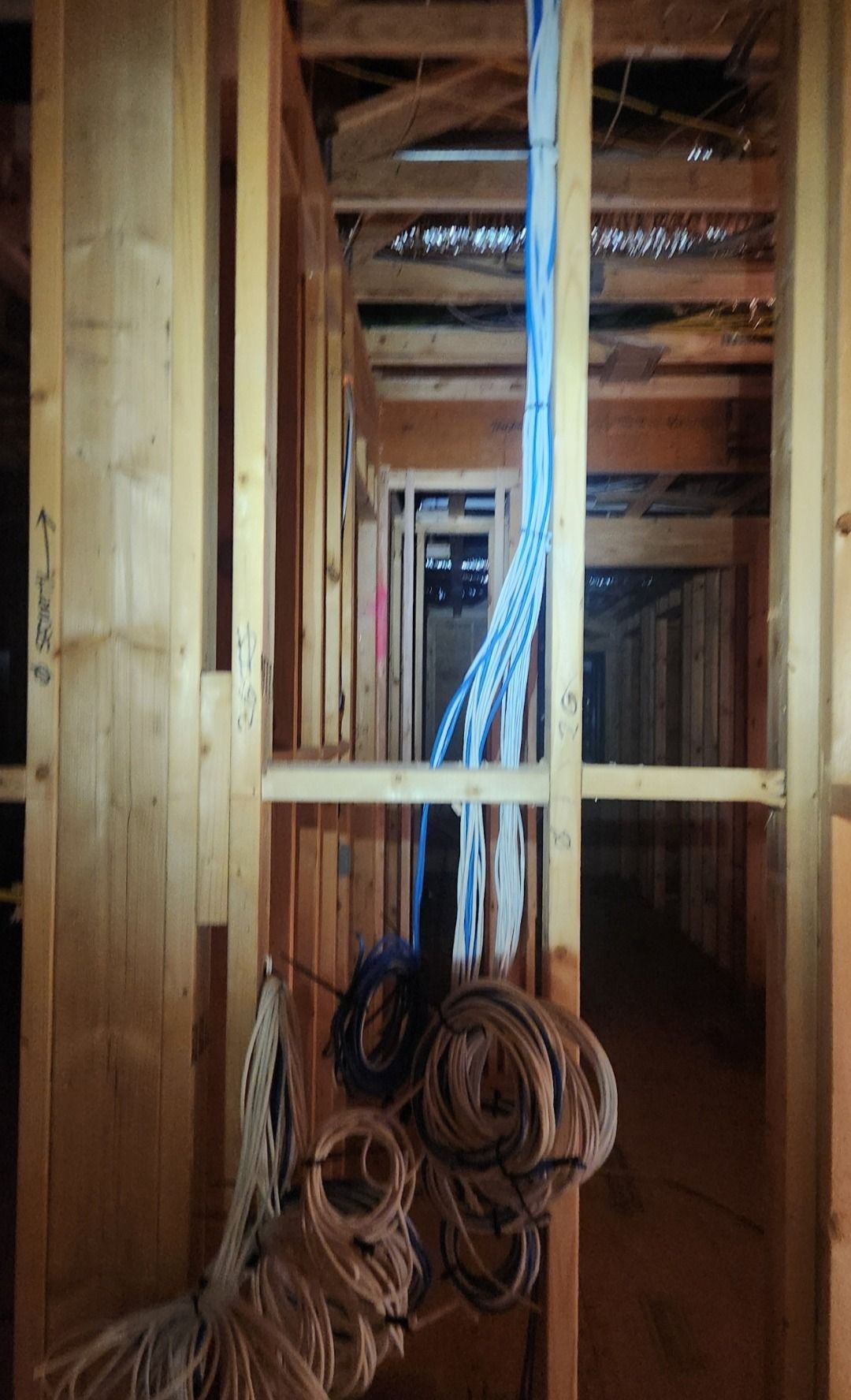
What Proper Low Voltage Work Actually Requires
Fishing cable through existing framing is technically different from pre-wiring new construction, and most of the difficulty lies in routing runs without opening large sections of drywall. In a home where walls are finished, the path from the panel to a camera location at a soffit corner may require working through the attic, down through an interior partition, and laterally to the outlet box—each transition is a decision point that affects how clean the finished result looks. Integrity Home Technologies has run these paths in Burlington homes and in older Newport properties where the framing layouts make routing unpredictable.
Once cable is pulled and terminated, what you notice is straightforward: devices are in the locations you specified, wires are not visible along baseboards or surface-mounted in raceways, and each run responds cleanly when tested. A labeled cable at both ends also means any future technician—or the homeowner—can identify what goes where without tracing wire by hand.
Pre-wiring during new construction follows a different sequence: cable is staged before drywall so runs can take direct paths and outlet boxes are set at rough-in. The method that applies to your project depends entirely on the stage of the build or renovation, and Integrity Home Technologies works in both conditions.
Common Questions About How the Wiring Is Done
These questions cover how low voltage wiring is actually performed in residential settings, including what decisions get made on site and what a finished installation looks like.
What cable types are used for different low voltage devices, and does it matter?
Each device category uses a specific cable standard—Cat6 for network and IP cameras, RG6 coax for certain video runs, and speaker wire or dedicated control cable for audio and lighting systems. Using the wrong cable type for a run means the device either underperforms or fails to meet the manufacturer's wiring requirement, so cable selection is confirmed before pulling begins.
How is cable routed through a finished wall without damaging the surface?
The crew identifies a path using the attic or crawlspace as a transit corridor, drilling down through top plates or up through bottom plates to reach the outlet location. Where an attic or crawlspace path is not available, a flex bit or fish tape is used through the cavity, keeping the wall opening limited to the outlet box cutout itself.
Why does labeling matter at both ends of a cable run?
A cable labeled only at the device end is useful while the install is fresh but becomes a problem during any future addition or troubleshooting session. Labeling at both the device location and the panel end means the system can be extended or modified without pulling cable to trace it.
When should low voltage wiring be planned in a new construction build?
Cable should be staged before insulation and drywall, which in most Northern Kentucky builds means coordinating with the framing and rough-in trades. Running cable after drywall is hung is possible but costs more time and requires more access points, so the pre-drywall window is worth hitting if the schedule allows.
What does a properly terminated low voltage run look like when the job is finished?
Terminations at keystone jacks or panel ports should seat fully, with no untwisted wire pairs exposed beyond the connector. A tested run confirms continuity end to end and, for network cable, verifies that the pair geometry is preserved so the signal reaches rated speed.
Integrity Home Technologies also installs low voltage wiring in Cincinnati, Northern Kentucky, Union, Lebanon, and Newport. To go over your specific device layout and confirm what the cable runs will involve, request a site visit and Integrity Home Technologies will map the job before any work begins.