
Pool and Deck Lighting Planned Before Wire Runs
Pool lighting installation in Burlington for properties where waterline coverage, deck safety, and proper circuit protection are all part of the scope
A pool lighting project goes wrong most often at the planning stage, not during installation. The fixture layout, the wiring route, and the circuit configuration all need to be worked out before anything is mounted or wired, and on lots where the pool sits close to the house, fencing, and existing utility runs, those decisions require a site visit rather than a phone estimate. Integrity Home Technologies handles pool lighting installation in Burlington with a site-first process: Stephen sees the pool, deck, steps, and existing circuits before any fixture is specified or any wire is run. That sequence is what prevents conflicts between new wiring and existing electrical runs that do not appear on any drawing.
Burlington and Union have a significant number of subdivision lots where pools are positioned in relatively tight back yards, with utility easements along the fence line and existing circuits that were run when the pool was originally built. Routing new low-voltage or line-voltage wiring on those lots requires reading what is already in the ground rather than assuming a clear path exists. Stephen maps the wiring route during the site visit, then places fixtures at the waterline and walkways to cover the pool perimeter without producing glare at eye level for swimmers. All pool lighting circuits are wired to GFCI-protected connections, and every fixture is confirmed operational before the job is closed out.
To arrange a site visit and review your pool layout before work begins, call Integrity Home Technologies at (513) 375-2342.
Why the Site Visit Drives Every Decision
Pool lighting involves line-voltage wiring in a wet environment, which places it in a different category from landscape lighting or interior audio work. Fixture selection, placement height, circuit protection, and wiring method are all governed by electrical code requirements for aquatic environments, and the specific requirements depend on what is already installed, what the pool shell material is, and where the existing service panel is located relative to the pool. None of those variables are visible without being on-site, which is why the site visit is the first step rather than a scheduling formality.
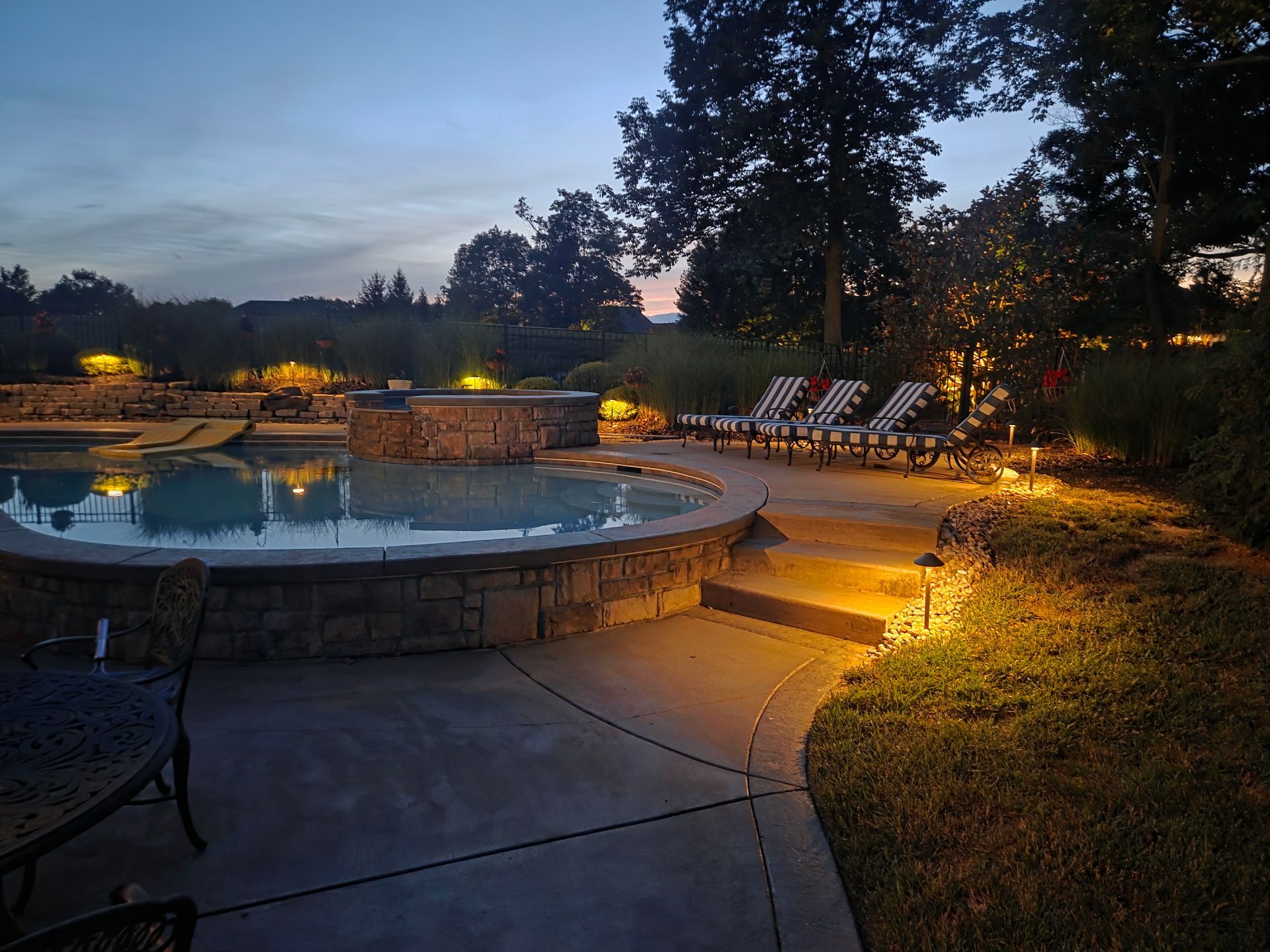
Once the work is finished, the most immediate observable change is that the pool perimeter and steps are readable at night. Waterline fixtures illuminate the pool from below the surface, making depth and the pool edge visible to swimmers. Deck and step lighting eliminates the unmarked drop-offs that make nighttime entry and exit difficult. The combination means the pool is usable after dark without relying on ambient light from the house or a patio fixture pointed in the wrong direction.
When comparing quotes for pool lighting, clarify whether the scope includes only fixture placement and wiring or also the new GFCI-protected circuit if one does not already exist. Those are two different scopes with meaningfully different labor and material requirements, and a quote that excludes the circuit will require a second contractor visit before the fixtures can be powered. Stephen's process includes confirming what the quote covers at the site visit stage so there are no scope gaps once work begins.
Answers About How Pool Lighting Is Installed
The questions below address how pool lighting is planned, what the installation involves, and what separates a complete job from one that leaves work undone.
What does the site visit cover and why is it required before fixture selection?
Stephen uses the site visit to see the existing electrical circuits, the pool shell type, the deck layout, and the wiring routes available, because fixture compatibility and wiring method both depend on existing conditions that cannot be assessed from a description or a photo.
How are pool lighting fixtures positioned to avoid glare for swimmers?
Waterline fixtures are mounted below the water surface and angled to project light across the pool floor rather than upward toward eye level, so the illumination makes the pool interior visible without producing direct glare at the surface where swimmers are looking.
Why must pool lighting circuits be GFCI-protected and what does that involve?
Electrical code requires ground-fault circuit interrupter protection for all circuits in aquatic environments because water contact with a standard circuit creates a shock hazard; GFCI protection interrupts the circuit within milliseconds of detecting a ground fault, and Stephen wires every pool fixture to a compliant circuit as part of the installation scope.
What is the difference between including a new circuit and only installing fixtures?
If a GFCI-protected circuit does not already exist at the pool equipment pad, it must be run from the panel as part of the project; a quote that covers only fixture placement and wiring to an existing circuit is a smaller scope and leaves the new circuit as a separate item that must be added before the fixtures can operate.
How do you confirm everything is working before the job is finished?
Every fixture is powered and visually confirmed operational at the end of the installation, including verification that the GFCI protection trips correctly when tested, so the system is fully functional and code-compliant at the point Stephen leaves the site.
Integrity Home Technologies also installs pool lighting in Cincinnati, Northern Kentucky, Union, Lebanon, and Newport. To set up a site visit for your pool and deck layout, call (513) 375-2342 and speak with Stephen about what the project will involve.