
Fixtures Placed Where Architecture Earns It
Landscape lighting installation in Burlington for properties where pathway safety and architectural detail need visible, lasting results
Low-voltage landscape lighting requires a plan before a single wire goes in the ground. Integrity Home Technologies installs landscape lighting in Burlington with fixture placement mapped to architecture, pathways, steps, and trees before any cable is run. Founder Stephen Ratcliffe has more than twenty years of low-voltage installation experience and does the work personally on every project. The result is a finished exterior that reads as intentional from the street rather than a collection of fixtures dropped into beds at random.
The installation sequence starts with a walk of the property to identify focal points and problem areas. Fixtures are positioned before wires are routed, which keeps the layout from being driven by what is easiest to reach rather than what actually lights the space. Low-voltage cable is then routed through existing beds and along structure edges to keep lawns undisturbed and beds intact. The transformer and controls are set up and tested on-site, and nothing is left for the homeowner to commission later. Color-changing fixtures with remote control are available for clients who want seasonal variation without replacing hardware.
To schedule a property walk and review fixture placement options for your home, call Integrity Home Technologies at (513) 375-2342.
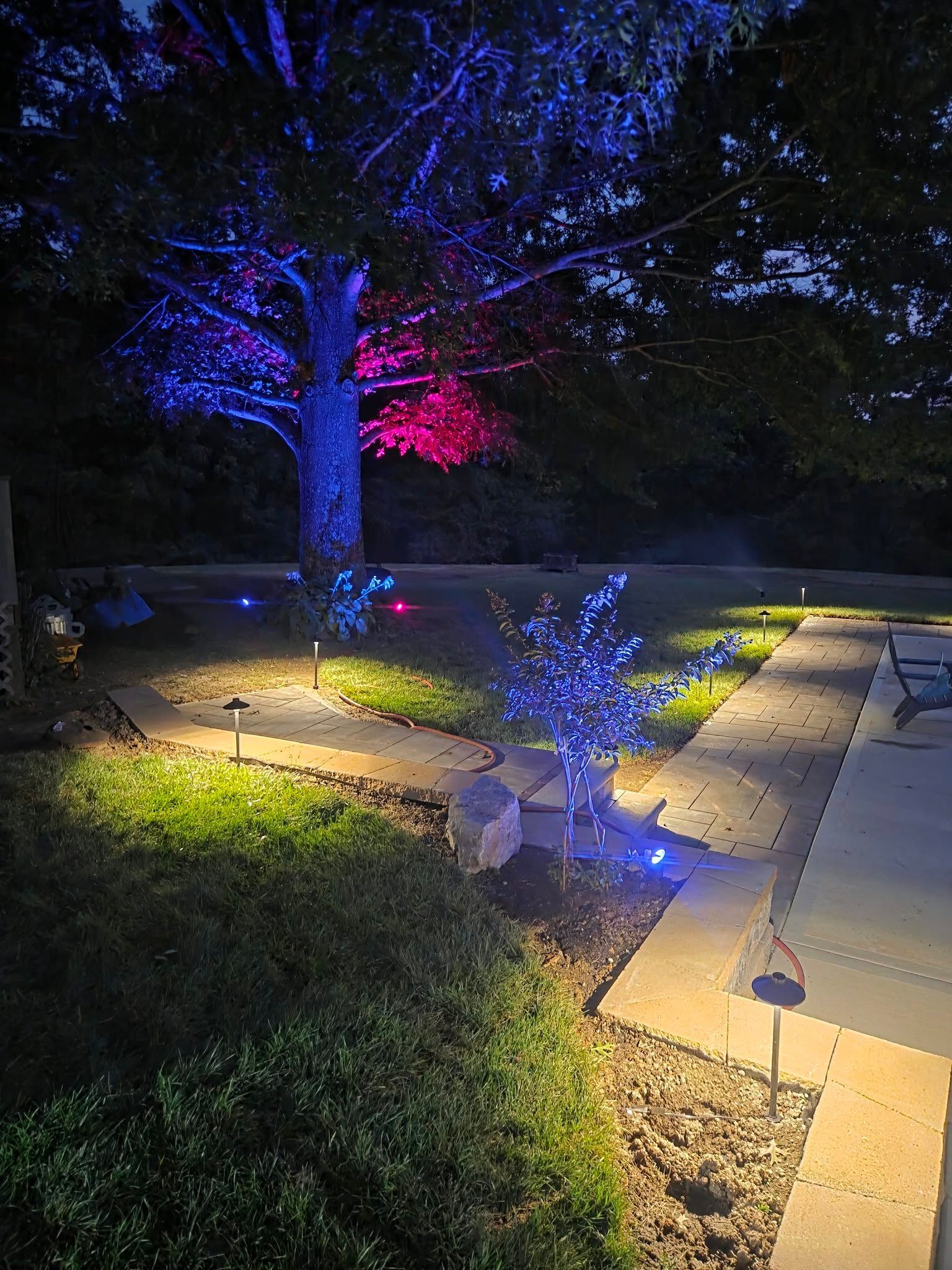
What Proper Landscape Lighting Actually Accomplishes
A well-executed landscape lighting plan does two separate jobs: it makes the property navigable after dark and it makes the architecture visible from the street in a way that daylight does not always show. Pathway and step lighting serves a functional purpose, eliminating the low-contrast surfaces that make steps hard to read at night. Uplighting on structural elements, trees, and walls creates depth and shadow that define the geometry of the home. When both are done together with consistent fixture types and a balanced transformer load, the finished look holds up over time rather than becoming uneven as fixtures age at different rates.
After installation, the most immediate change is navigability. Steps, driveway edges, and path transitions that were previously unmarked are defined by directed light. Focal points on the home's facade or in the landscape become readable from the street in a way they were not before. With color-changing fixtures, the system can be adjusted by remote to shift warmth or hue without touching a fixture or rewiring anything.
Low-voltage systems operate at twelve volts, which keeps installation safe for residential landscapes and allows fixtures to be repositioned as plantings grow and the landscape changes over time. That flexibility matters on properties where trees or shrubs are still maturing, because a fixture that worked well at planting may need to be moved three years later as canopy fills in.
What Property Owners Ask About the Work
The questions below address how landscape lighting installation is planned and executed, including what the process involves and how fixture decisions are made for different property conditions.
How is fixture placement decided before installation begins?
Stephen walks the property first to identify the architectural elements, pathways, steps, and trees that warrant light, then maps fixture positions before any wire is routed, so placement is driven by the property rather than by where cable runs are easiest.
What determines how wiring is routed through an existing landscape?
Cable routes are chosen to follow bed edges and structure lines rather than crossing open lawn, which keeps the finished installation from requiring visible conduit or disturbing established plantings during installation.
Why does transformer sizing matter and what happens when it is wrong?
A transformer that is undersized for the fixture load dims output across the system as fixtures are added, while one that is correctly sized at installation supports future fixture additions without rewiring or replacing the transformer.
How are color-changing fixtures controlled and what do they require?
Color-changing fixtures are controlled by a remote and do not require a smart home hub or app, so adjustment is available to anyone in the household without configuring additional equipment.
What should you look at to judge the quality of a finished landscape lighting installation?
Consistent brightness across fixtures at equal distance from the transformer, clean cable routing that is not visible at bed level, and fixtures that direct light onto surfaces rather than into the viewer's line of sight are the observable indicators of a well-executed job.
Integrity Home Technologies also installs landscape lighting in Cincinnati, Union, Lebanon, Newport, and Mason. To arrange a property walk and begin planning fixture placement, call (513) 375-2342 and speak with Stephen about your specific layout.